
"Yunnan coffee statistics"
100 article(s) found

"Made in Yunnan" coffee breakthrough "original bean extraction" technology into the market
According to statistics, by the end of 2016, Yunnan coffee planting area exceeded 1.8 million mu, 2016/2017 production season, Yunnan coffee production is expected to reach about 150,000 tons, Yunnan coffee planting area and output accounted for more than 98% of China; and the world coffee production in this production season is about 8.879 million tons, Yunnan coffee accounts for about 1.7% of the global total output. Among the many coffee companies in China, Hougu Coffee

Yunnan Province Coffee Industry Association statistics Kunming existing cafes have exceeded a thousand in the next 4 years or blowout
Since Starbucks entered Kunming in 2011 and set the craziest queuing record, cafes have sprung up in Kunming, more and more coffee giants have begun to target coffee terminal sales, and more and more entrepreneurs have rushed to open coffee shops. I don't know when, Kunming young people's consumption quietly shifted from Internet cafes to cafes. consumption concept

Statistical Analysis report of Coffee consumption in China in 2014
According to the statistics of authoritative departments, at present, the annual growth rate of coffee consumption in China is 10% and 15%.
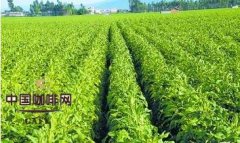
Yunnan has geographical and climatic advantages for developing high-quality coffee industry
Speeding up the transformation of medium and low-yield coffee, benefiting the people and promoting the development of active exhibitors to enhance the international competitiveness of coffee products Yunnan has the geographical and climatic advantages of developing high-quality coffee industry According to Kunming Customs statistics, Yunnan coffee exports in 2011 earned 130 million yuan, an increase of 49.9% year-on-year, becoming one of the characteristic agricultural products in Yunnan Province with the fastest export growth. During the Twelfth Five-Year Plan period, coffee has been the focus of our province.
Coffee industry springing up in Ninger, Yunnan
Since the introduction, development and cultivation of small-grain coffee in Ning'er County, Yunnan Province in 1989, it has become another important channel to increase agricultural efficiency and increase farmers' income. According to statistics, the output of coffee beans in the county reached 4500 tons in 2010, with an output value of 113 million yuan.
Coffee planting industry in Yunnan
The current price of coffee futures in New York remains between 110 cents and 115 cents, according to a notice released by the Yunnan Coffee Industry Association.

Drink doves to quench thirst! Yunnan's "high-end" instant coffee drinks attempt to seize the domestic coffee market
Professional baristas Please follow the Coffee Workshop (official Wechat account cafe_style). Not long ago, the local coffee brand Xinruike in Yunnan Province, a new instant coffee Mata Star, was listed in Guangzhou. It is reported that at present, Xinruike Mata Star series of new products have been put on sale in many first-tier retail supermarkets. According to statistics, the annual growth rate of coffee consumption in China is about 25%, which is much higher than the global growth rate of 2%.
A rainforest ecological coffee farm
Yunnan Aiyi Group, Starbucks' only partner in the Asia-Pacific region, announced in Kunming that it will invest 600 million yuan to build the first rainforest ecological coffee farm in China. Since French missionaries brought coffee to Yunnan in 1892, after a hundred years of development, Yunnan has become the largest coffee planting and export base in China. According to statistics, coffee in the province in 2012
China's coffee growing industry may encounter "winter" again
Yunnan Province, China's largest coffee-producing area, is about to usher in the harvest season. The industry predicts that China's coffee planting industry may encounter a cold winter price again in the new season, and the industry calls on the public to drink more Yunnan coffee beans to help coffee growers and enterprises survive the cold winter. Coffee futures prices in New York remain between 110 cents and 115 cents, according to a recent circular issued by the Yunnan Province Coffee Industry Association.

China's coffee growing industry may encounter "price winter" appeal to the public to drink more "Yunnan coffee beans"!
Professional barista exchanges, please pay attention to coffee workshop (Weixin Official Accounts cafe_style) China's largest coffee producing area Yunnan Province is about to usher in the harvest season. The industry expects that China's coffee planting industry will encounter "price winter" again in the new season, and the industry appeals to the public to drink more Yunnan coffee beans to help coffee growers and enterprises survive the winter. Yunnan Province Coffee Industry Association recently released
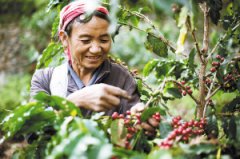
The output of coffee beans in Yunnan reached 139000 tons at the end of the harvest season from 2015 to 2016.
A few days ago, the reporter learned from the Yunnan Provincial Coffee Industry Association that the province's coffee harvest season in 2015 and 2016 has ended. Preliminary statistics show that the province's coffee production reached 139000 tons, an increase of 21000 tons over the 118000 tons in the 2014-2015 harvest season. Although the output of 139000 tons is higher than that of the last picking season, it is affected by low temperature and cold wave disaster, low market price and other factors.

Yunnan Enterprises to build Asia's largest Coffee Base in Laos
Zhang Yue, deputy general manager of Chongqing Neng Investment Group, said that Chongqing Neng Tou, a key state-owned enterprise in Chongqing, has formulated a coffee development strategy to promote enterprise transformation and upgrading, and its Chongqing Coffee Trading Center was officially listed on June 17, 2016. With the support of the governments of China and Laos, the company will cooperate with Yunnan Changshengda to jointly invest in building the largest original coffee base and industrial park in Asia.

Yunnan Enterprises to build Asia's largest Coffee Base in Laos
Zhang Yue, deputy general manager of Chongqing Neng Investment Group, said that Chongqing Neng Tou, a key state-owned enterprise in Chongqing, has formulated a coffee development strategy to promote enterprise transformation and upgrading, and its Chongqing Coffee Trading Center was officially listed on June 17, 2016. With the support of the governments of China and Laos, the company will cooperate with Yunnan Changshengda to jointly invest in building the largest original coffee base and industrial park in Asia.

The export of Brazilian coffee beans plummeted in July and the total income increased and affected Yunnan farmers.
Coffee bean exports plummeted in July, according to figures released on Aug. 11 by the Brazilian Coffee Export Association, coffee bean exports plunged 33.7% in July from a year earlier to 1.9 million bags (1 bag = 60kg), mainly due to low stocks and the lack of newly harvested coffee beans to catch up with exports. Affected by this, the price of international coffee futures has increased slightly. August 16, the same day the price of the American coffee futures contract
"unsalable" Pu'er coffee beans
In April, the Yunnan coffee industry, which was shrouded by rumors of "unsalable coffee beans", once caused panic among farmers and the industry. However, statistics by the end of April showed that there were only 3000-4000 tons of Pu'er left in the main producing areas, including some coffee beans of poor quality.

Nestl é expands the scale of purchasing coffee beans in China and is optimistic about the Chinese market.
Yunnan Pu'er is an important planting base of Nestle Coffee, and the settlement of Nestle Coffee Center seems reasonable. Statistics show that there are about 123000 farmers in Yunnan, planting an area of about 124000 hectares of coffee, while the annual output of raw coffee beans is 70, 000 to 100000 tons. The Nestle Coffee Center, completed on March 23 in Pu'er City, covers an area of 30,000 square meters. According to the project planning, the central planning

The competition in Kunming cafes is fierce, and the war is imminent, but Yunnan coffee has no chance to participate in the war.
There are more and more coffee shops in Kunming, although the number is far less than that of traditional teahouses, the style of coffee shops is much better than that of teahouses, and some chain coffee shop brands are also gradually appearing in prosperous areas. if you add the coffee shops of local brands in Kunming, according to incomplete statistics, there are nearly 200 large and small coffee shops in the city, and they are still growing rapidly. Expansion is the most

The competition in Kunming cafes is fierce, and the war is imminent, but Yunnan coffee has no chance to participate in the war.
There are more and more coffee shops in Kunming, although the number is far less than that of traditional teahouses, the style of coffee shops is much better than that of teahouses, and some chain coffee shop brands are also gradually appearing in prosperous areas. if you add the coffee shops of local brands in Kunming, according to incomplete statistics, there are nearly 200 large and small coffee shops in the city, and they are still growing rapidly. Coffee Shop

Flavor description of Brazilian Hilado Coffee beans
In July this year, the Yunnan Coffee Association said that the depressed market situation has led to low enthusiasm for picking by enterprises or farmers. In Honghe, Baoshan and other places, there is still a phenomenon of abandoning harvesting and tube abandonment, which has brought certain losses to coffee production in the province. In addition, according to the statistics after the end of this season, Jia Ben told every
The Survival Logic of like shit Coffee
August 29th is a big day for Puyahong. On this day, Yunnan Zhonghe Coffee Co., Ltd., which he had operated for many years, landed in the Shanghai Stock Exchange Center and became the first Chinese coffee industry company to be successfully listed on the Shanghai Stock Exchange. In China, agriculture is generally regarded as a weak industry. For a long time, agricultural products (000061, stock bar) have low added value and low remuneration for agricultural production.